

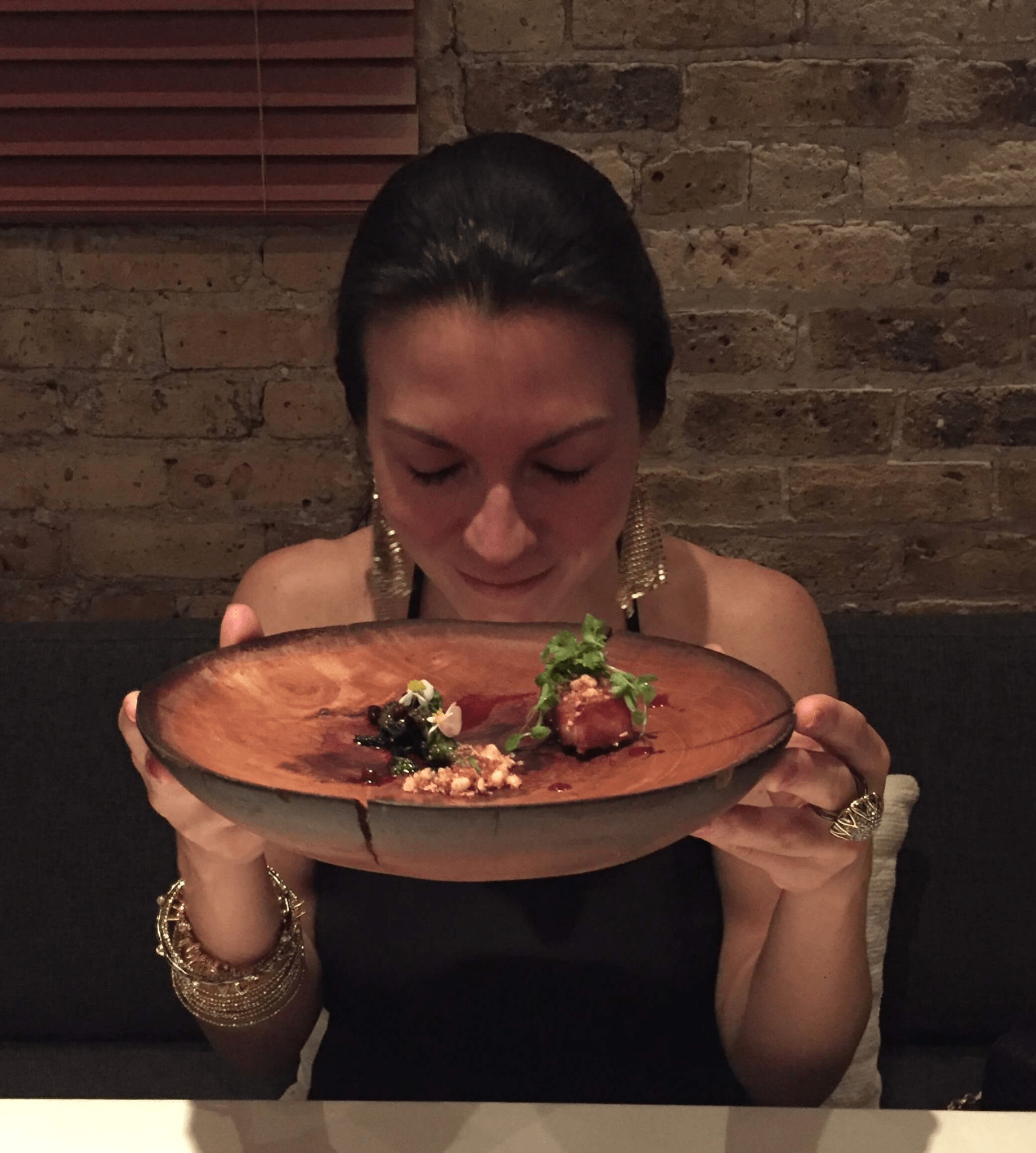
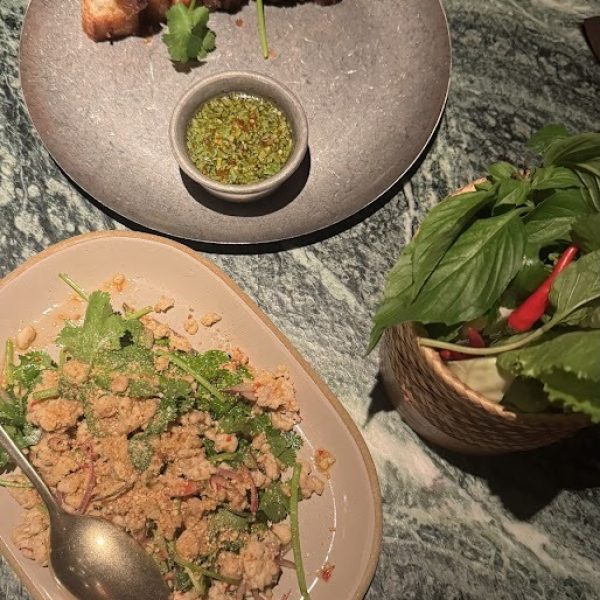
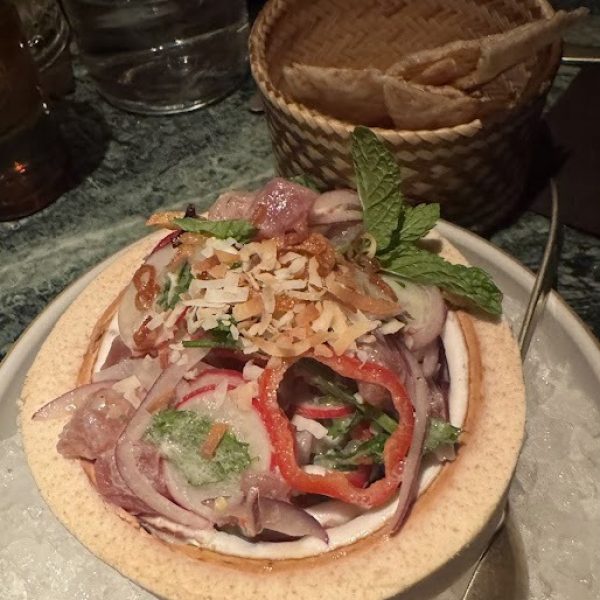
Crying Tiger has quickly become one of those Chicago restaurants people The early online sentiment tells a consistent story: bold flavors, real heat, polished service, and a welcome departure from the overly sweet, overly safe version of Southeast Asian food many diners have come to expect. It’s the kind of place that attracts both neighborhood regulars and diners who are intentionally seeking something with a point of view.
Walking in, the first thing that hits you is the space. If you remember this address from its Hub 51 days, the transformation is genuinely impressive. The renovation feels thoughtful and grown-up: moody lighting, refined finishes, and subtle Southeast Asian cues that feel elegant rather than theme-y. It’s classy without being stiff, energetic without being chaotic, and a clear signal that this is a serious food operation that also understands atmosphere.
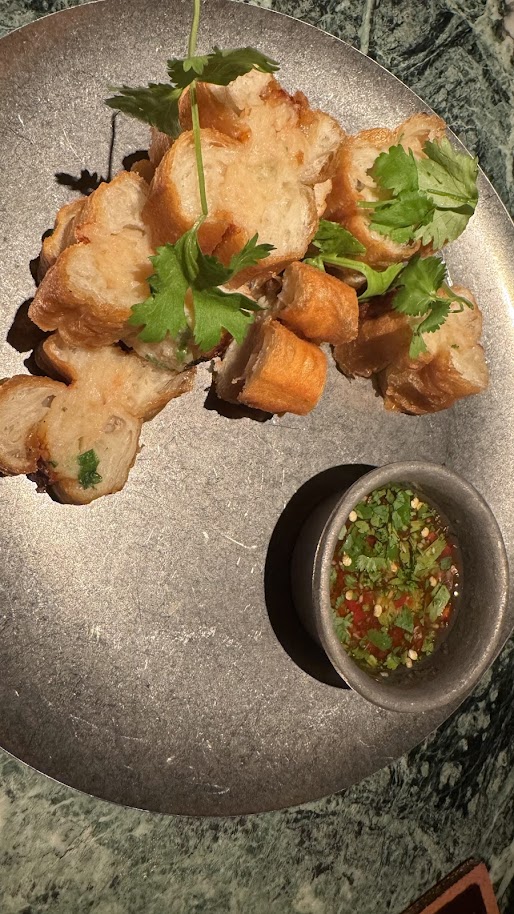
The menu largely delivers on that promise. The shrimp toast is a standout and deserves its own moment. This isn’t the familiar, overly oily version you’ve seen a hundred times. The preparation feels fresh and intentional, with great texture and balance. It’s craveable, sharable, and absolutely a reorder dish. The spice level across the menu is also dialed in beautifully. Crying Tiger understands that Southeast Asian cuisine lives in the interplay of heat, sweetness, acidity, and umami. Nothing feels muted, but nothing feels reckless either. The option to sample different chilies and customize heat at the table is a smart move. It respects both the integrity of the food and the comfort level of the guest, which is harder to pull off than it looks.
Service is another strong point. This is hospitality that feels present without being performative. The General Manager stopping by the table was genuine, not scripted, and the extra step of personally walking us next door to Gus’s Sip and Dip and making sure we were fully settled speaks volumes. That’s not just good service; that’s leadership modeling hospitality for the entire team. It’s the kind of moment guests remember and talk about later.
From an operator’s perspective, there are a few opportunities worth noting. Chicago winters are unforgiving, and the lack of a coat check is felt immediately. Low, slippery seating plus bulky winter coats is not a friendly combination, and it subtly detracts from an otherwise polished experience. Seating density is another pressure point. While it’s clear the goal is to maximize covers, the side room feels tight, and even the front bar area can feel congested when navigating to tables. This isn’t a dealbreaker, but it does impact flow and guest comfort, especially during peak hours.
Overall, Crying Tiger is doing a lot right. The concept is clear, the execution is strong, the flavors are confident, and the hospitality is memorable. With a few operational tweaks to improve comfort and flow, this restaurant could easily move from “very good” to “exceptional.”
CUF Badge: 🟢 Green — doing things right, with just a few refinements needed to level up.